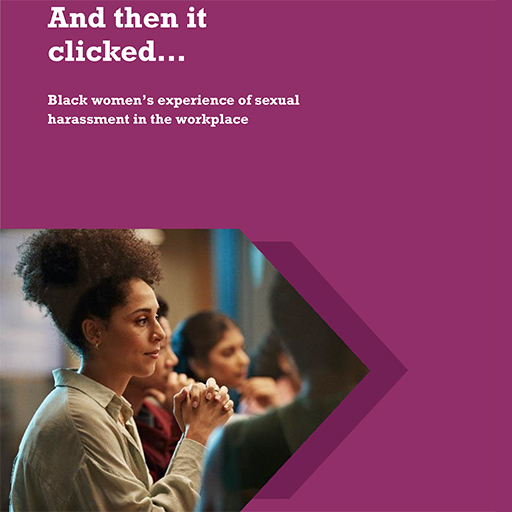
NASUWT is proud to have played a leading role in the ground-breaking 2024 TUC report And Then It Clicked, exploring Black women’s experiences of sexual harassment.
Jennifer Moses, NASUWT National Official for Equality and Training, has written about the corrosive ways sexual harassment and misogyny land differently when you are a Black woman.
Read more
Girls in schools in the UK are experiencing high levels of sexual violence and harassment, as alarmingly evidenced by Parliament’s Women and Equalities Select Committee.
The UN calls violence against women and girls ‘one of the most widespread, persistent and devastating human rights violations in our world today’.
The UN is marking the 16 Days of Activism against Gender-based Violence between 25 November and 10 December 2025 under the global theme ‘UNiTE to End Digital Violence against All Women and Girls’.
NASUWT is committed to securing an end to gender-based violence against women and girls at home and around the world and believes that governments, education bodies and other organisations have a key role to play.
Through our Sexual Harassment Action Plan, we are fully committed to making the Union a safe space and inclusive space for women, with the work of our Sexual Harassment Task Group changing the way we work. The Sexual Harassment Action Plan can be found on the right/below.
Some startling statistics
-
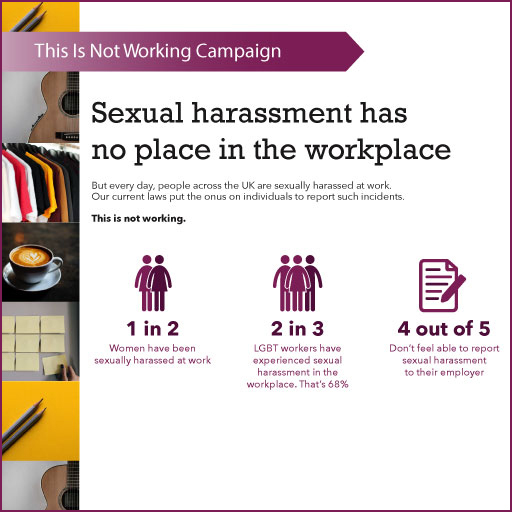
More than one in three women worldwide have experienced violence in some form in their lifetime.
-
Two women every week are killed by a current or ex-partner and other close relative.
-
Only 15% of serious sexual offences and 21% of partner abuse incidents are reported to the police.
-
Black women suffer disproportionately from violence and face multiple barriers to reporting, including heightened forms of shame, stigma, cultural and religious constraints, racism, immigration insecurities, and lack of awareness of their rights.
-
More than 100,000 women and girls in the UK (pdf) are at risk of and living with the consequences of female genital mutilation, forced marriage and so-called ‘honour-based’ violence.
-
Inquiries into child sexual abuse repeatedly reveal failures at every level of the state to prevent or protect girls from abuse.
-
Girls in schools in the UK are experiencing high levels of sexual violence and harassment, as alarmingly evidenced by Parliament’s Women and Equalities Select Committee.
-
Legal aid has shrunk and abused women are often unable to obtain legal advice and representation which has meant that some women find themselves face-to-face with their perpetrators in courts.
Young women and sexual abuse
-
A third of 16-18 year olds subjected to unwanted sexual touching at school.
-
71% of 16-18 year olds witnessed sexual name-calling towards girls at school.
-
85% of women aged 18-24 had experienced sexual assaults by men in public.
-
64% had experienced sexual harassment.
- 35% had been touched sexually.
Tackling sexual harassment and sexual violence in schools has been of growing concern to NASUWT for many years. These issues have been part of the Union’s anti-bullying/harassment work for over a decade and NASUWT has lobbied numerous governments - working alongside organisations such as the Anti-Bullying Alliance, Childnet International, Stonewall and others.
NASUWT was the first union to launch a programme of work on prejudice-related bullying, which included work on gender-based harassment and violence and challenging the sexualisation of women and young girls.
We are now working with Childnet International’s Project deShame, tackling online sexual harassment amongst teens.
The Union is fully committed to a set of Gender Equality Challenge Principles that supports and champions equality for women and girls.
Anonymous feedback
If you require a response from us, please DO NOT use this form. Please use our Contact Us page instead.
In our continued efforts to improve the website, we evaluate all the feedback you leave here because your insight is invaluable to us, but all your comments are processed anonymously and we are unable to respond to them directly.