

Key findings
The NASUWT Wellbeing at Work Survey 2025 ran from July through to September 2025.
Members were contacted by email and text to encourage participation and a total of 10,347 teachers responded, a similar response rate to the 2024 and 2022 surveys.
You can further explore data from the 2025 and 2024 surveys via our Explore the Data page.
Warwick-Edinburgh mental wellbeing scale score
As in previous surveys, teachers completed the 14-item Warwick-Edinburgh Mental Wellbeing Scale, an internationally recognised measure of mental health and wellbeing.
The average wellbeing score increased slightly, rising from 38.4 in 2024 to 39.3 this year.
While this represents a modest improvement, it remains significantly below the general population average of 50-52, indicating continued low levels of mental wellbeing across the teaching profession.
A concerning disparity is evident between disabled and non-disabled teachers.
Disabled teachers reported an average score of 36.3 - 3.4 points lower than teachers without a disability.
Personal experience of wellbeing issues
Teachers were asked about their experiences of wellbeing issues and the impact of their job on their mental and physical health.
As in previous surveys, workload remains the leading cause of work-related stress.

of teachers report that their job has adversely impacted their mental health (up 3% from 2024).
-
82% have experienced more work-related stress in the last 12 months (down 2% from 2024).
-
67% report that their job has adversely impacted their physical health (down 1% from 2024).
-
Female teachers were more likely to report increased work-related stress (83.4%) than male teachers (78%).
-
When ranking the factors affecting their mental health, teachers identified:
-
workload (average rank 2.5);
-
pupil behaviour (3.5); and
-
poor management (3.6)...
as the most significant contributors.
-
Impact of stress
Teachers continue to report high levels of stress-related symptoms:

report anxiousness due to work (up 1%).
-
88% report loss of sleep (up 1%).
-
31% report increased caffeine use (down 1%).
-
7% report increased use of prescription drugs (no change).
-
3% report experiencing self-harm due to work (no change).
Mental health support
Clear gender differences persist in how teachers respond to mental and physical health concerns.

of female teachers discussed issues with a colleague, compared with 56% of male teachers.
-
15% of male teachers took none of the actions listed to address wellbeing concerns - almost double the proportion of female teachers (7.6%).
-
74% of female teachers talked to a relative or friend, compared with 62% of male teachers.
A substantial divide also remains between classroom teachers and senior leaders regarding perceptions of available mental health support.

of headteachers agree that their school prioritises mental health, compared with only 19% of classroom teachers.
-
31% of headteachers believe their school has measures to manage stress and burnout, but only 5% of classroom teachers agree.
Regional variation
There are indications of regional differences in support provision. For example:
-
24% of teachers in London report access to a school-based counsellor, comparedcwith the average of 15%.
School response to wellbeing issues
Teachers were asked how their school responds to wellbeing and mental health concerns. The results remain troubling:

say their school does not provide workspaces that promote wellbeing (down 1%).
-
65% say their school lacks measures to monitor and manage stress and burnout (up 1%).
-
67% say their school does not have an accessible school-based counsellor (up 3%).
-
56% say their school does not offer flexible working opportunities (down 2%).
-
53% say their school does not provide a safe space for staff to take time out or debrief (down 1%).
-
43% disagree that their school provides clear policies on switching off or guidance on responding to emails outside working hours (down 3%).
-
48% say their school does not provide wellbeing or mental health training (up 3%).
-
48% disagree that their school gives equal weight to mental and physical health in managing staff absence (up 4%).
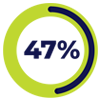
disagree that their school works with NASUWT or other trade unions to promote staff wellbeing - only 16% agree (up 3%).
-
37% say their school does not take women’s health and wellbeing seriously (up 2%).
-
Only 9% say their school has policies supporting menstrual health, and 22% report support for menopause-related issues (up 3% and 6% respectively).
-
47% say their school has an annual wellbeing survey (up 5%).
The teaching profession and wellbeing
Teachers remain deeply concerned about how national education systems address their wellbeing. Few view the overall policy environment as supportive.
-
43% strongly disagree that inspectorate regimes consider teacher wellbeing when assessing schools (down 8%). A further 31% disagree. Only 4% agree or strongly agree (up 1%).

agree or strongly agree that inspectorate practices negatively impact teacher wellbeing, although disagreement has risen slightly to 8% (up 2%).
-
65% disagree that government policies support schools in addressing teacher mental health and wellbeing (down 5%), while only 4% agree (up 1%).
-
47% disagree that government policies tackle mental health stigma (down 6%), with 12% agreeing (no change).
Demographic summary
-
Total respondents: 10,347
-
England: 85%; Scotland: 2%; Northern Ireland: 4%; Wales: 8%; Crown Dependencies: 1%
-
Primary phase: 35%; Secondary: 52%; Special education: 7%; Sixth-form/further education: 3%
-
Women: 78%
-
Ethnicity: White: 91%; Asian/Asian British: 3%; Black: 1%; Mixed: 2%
Conclusion
The NASUWT Wellbeing at Work Survey 2025 reveals continuing and significant challenges facing the teaching profession in relation to mental and physical health.
While there has been a modest improvement in average wellbeing scores since 2024, overall levels of teacher wellbeing remain far below those of the general population.
The persistent gap between disabled and non-disabled teachers further highlights the need for targeted support.
Workload continues to be the dominant source of stress, with pupil behaviour and school management also playing major roles. The effects on teachers’ lives remain profound, with high levels of anxiety, sleep loss and other stress-related symptoms.
Despite these pressures, many teachers, particularly male teachers, struggle to access or seek support, revealing important gender differences in help-seeking behaviours.
Schools’ responses to wellbeing issues remain inadequate. Large numbers of teachers report a lack of supportive workspaces, insufficient stress-management measures, limited access to counsellors, and a continued absence of flexible working opportunities.
While some areas show slight improvements, the data indicates continued shortcomings in schools’ abilities to address mental health and wellbeing effectively. Policies related to switching off, women’s health and mental health training also remain limited.
At a national level, teachers continue to express deep concern about the role of inspectorate regimes and government policy.
The overwhelming view is that current approaches fail to support teacher wellbeing and, in many cases, actively undermine it.
Overall, the findings from the 2025 survey point to a pressing and ongoing need for systemic action at both school and national levels.
Addressing these issues is essential to protecting the wellbeing of teachers and ensuring the long-term sustainability of the profession.
NASUWT will use the evidence from this year’s survey to continue pressing governments and administrations for urgent and meaningful reform.